
SEGASAMMANIA -SEGASAMMY Inside Story-
SEGASAMMANIA#002 Part1

SEGASAMMANIA -SEGASAMMY Inside Story- is content that explores the business activities of SEGA SAMMY Group through the lens of our value creation stories.
Beyond business strategies aimed at creating value, we deliver exclusive “mania-level” episodes, including the voices of employees working on the front lines and behind the scenes of product development that you can only find here.
- SEGASAMMANIA #002 Part1
-
2026.10.15
“Persona 30th Anniversary” The Story of Its Growth into a Global IP
Part 1
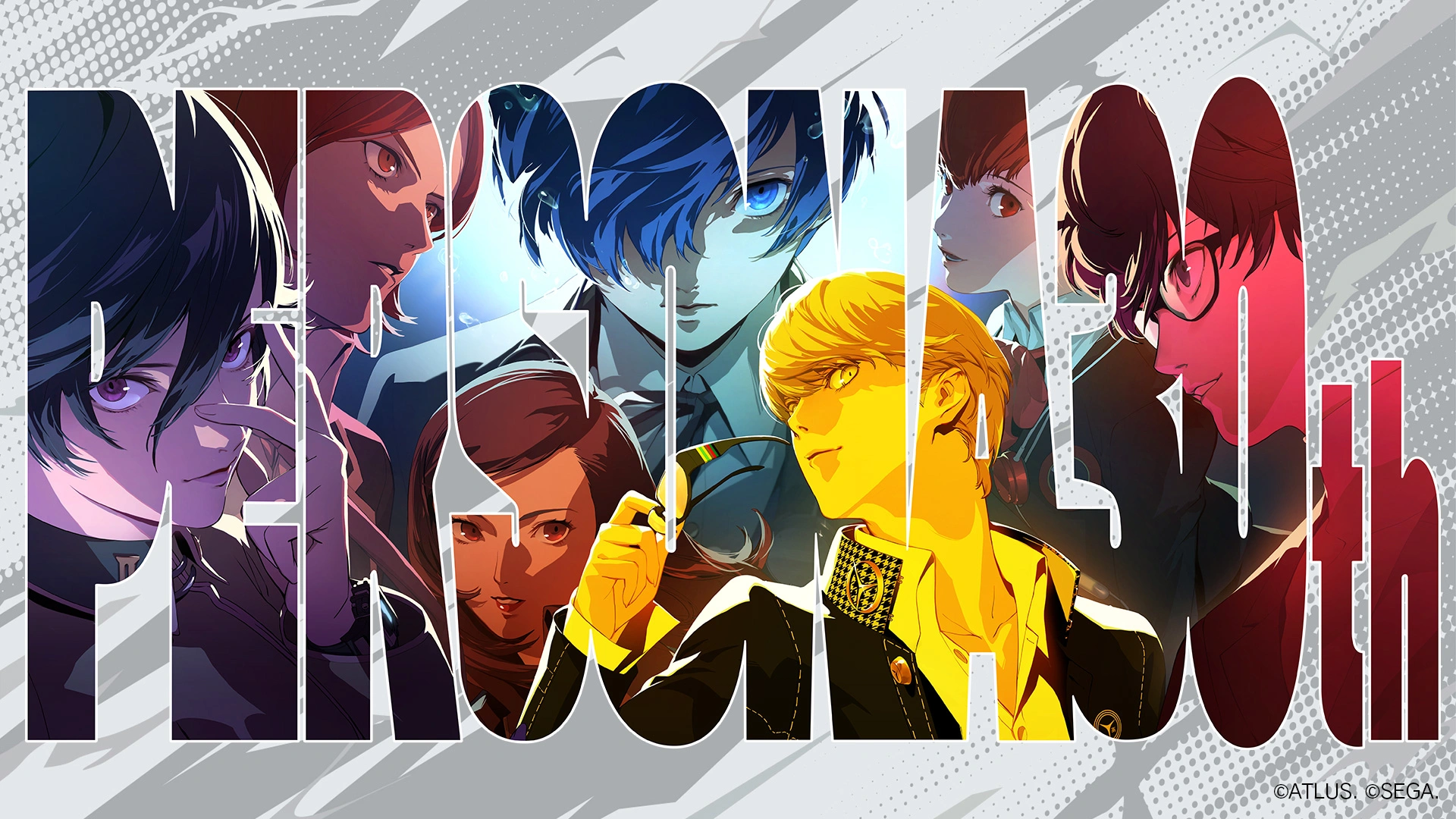
The Persona series, a juvenile RPG whose first installment was released in 1996 by ATLUS. CO., LTD. (hereinafter “ATLUS”), a member of the SEGA SAMMY Group, celebrated its 30th anniversary on September 20, 2026. Set in modern-day Japan, Persona has captivated fans with its distinctive gameplay experience, where school life intersects with the extraordinary. To date, the series has expanded to five numbered titles. With cumulative sales exceeding 30 million units worldwide as of June 2026, Persona has grown into a global IP with strong support not only in Japan but also overseas.
Why has Persona transcended its era and continued to attract users around the world?
In Part 1, we look back at the history of the series and its journey of expanding IP value. In Part 2, through an interview with Kazuhisa Wada, General Producer of Persona Studio, we explore the behind-the-scenes story of that value creation and the future that lies ahead.
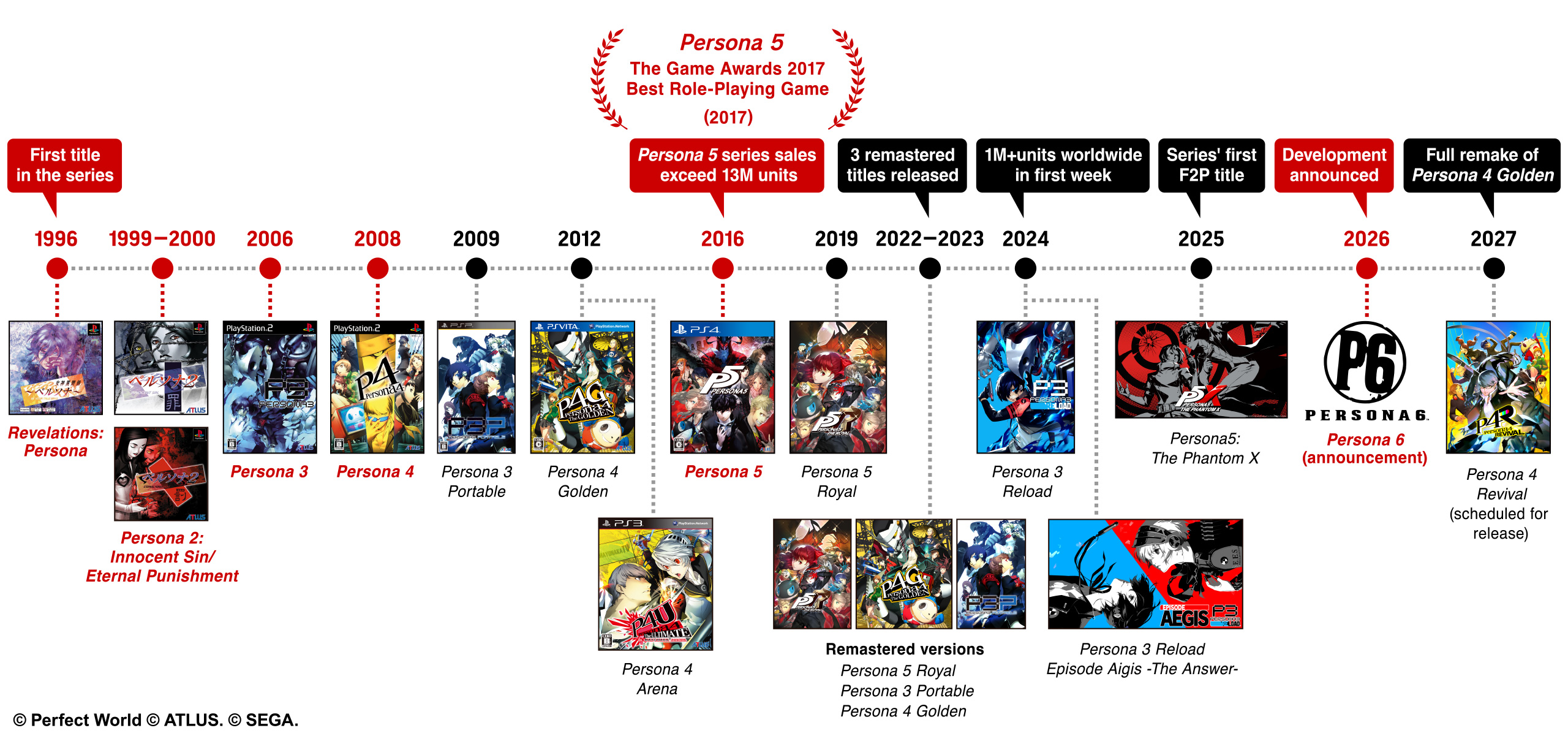
The History of Persona
*This is a selection of representative titles.
The Pursuit of Being “One of a Kind,” Established by Revelations: Persona and Deepened by Persona 2

Since 1986, ATLUS has consistently brought numerous RPGs with distinctive worlds to audiences. Building on the lineage of one of its flagship series, Shin Megami Tensei, the juvenile RPG series Persona was born in 1996. “Persona,” which gives the series its name, is the manifestation of the “other self” sleeping within a person’s heart, taking the form of a god or demon.
Across the series, teenage boys and girls, having awakened to their special Persona powers, encounter a variety of incidents and hardships as they grow. One of the series’ defining appeals is its mysterious world, which combines the familiar day-to-day experiences of student life, friendship, and romance with a touch of the extraordinary, as the characters take on occult cases involving strange rumors, urban legends, and other such phenomena.
Persona 5 : The moment of awaking to Persona
The first title in the series, Revelations: Persona, the starting point of the series, tells the story of high school students who use their Persona abilities to battle demons in order to restore a world transformed into an alternate dimension to its original state.
The following Persona 2, consisting of the two installments, “Innocent Sin” and “Eternal Punishment,” further deepened the series’ distinctive themes and worldview through the original premise that “rumors become reality,” portraying young people wavering between ideals and reality.
The value pursued by these early Persona titles was not about seeking support from the broadest possible audience, but rather about deliberately narrowing their target and pursuing a “one of a kind” identity that would attract passionate fans.
Persona 3 Marked A Shift Toward Being “Unique and Universal”
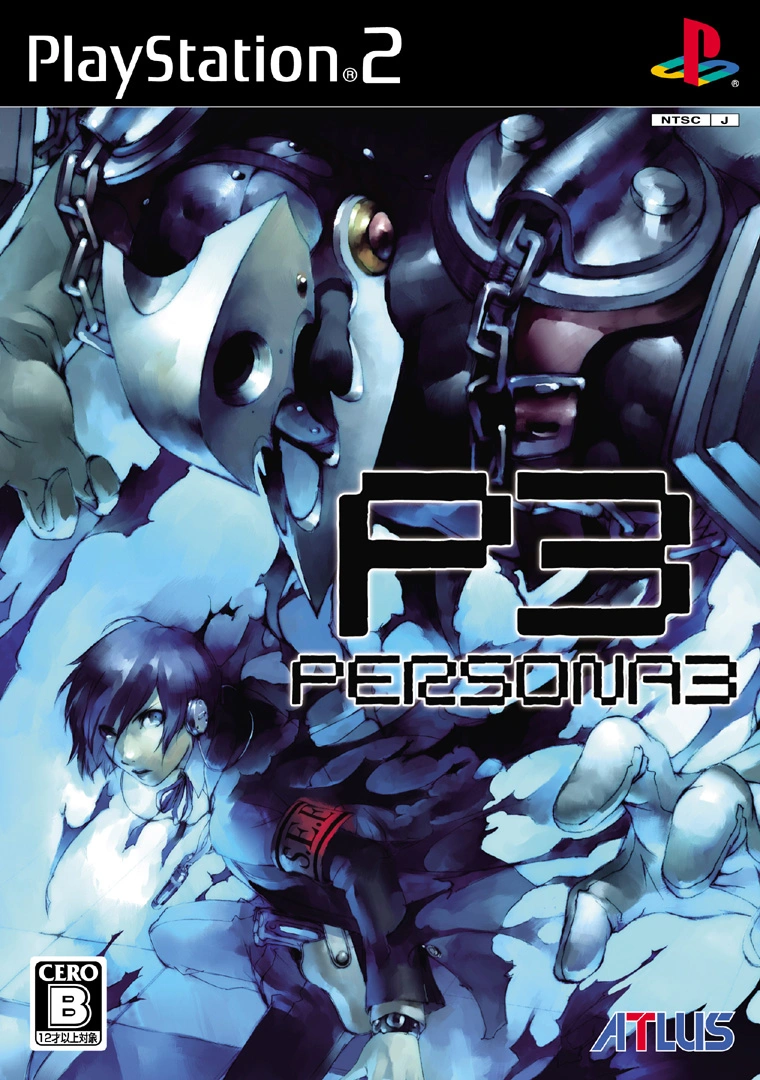
Released in 2006, Persona 3 is a title centered on the theme of “death,” asking how people should live their finite time.
The game structure, in which the protagonist spends the daytime living a school life and fights Shadows during the “Dark Hour” that appears between one day and the next, with ordinary life and the extraordinary interwoven, became the foundation for the series that followed.
This title also brought a major shift in the series’ values, from “one of a kind” to “unique and universal” (originality and empathy).
While retaining the emotionally resonant storytelling characteristic of Persona, it boldly renewed its direction and expression by introducing vocal music and stylish design. By evolving into a title that could reach more users while preserving its originality, it gained a new audience, and cumulative sales of the Persona 3 series surpassed five million units. It became a catalyst for the series’ dramatic growth.
Persona 3
At the same time, the business environment surrounding ATLUS was far from smooth. Against the backdrop of a shrinking domestic console game market, management became increasingly difficult in the 2000s, as the company faced various changes that shook its business foundation, including organizational restructuring and a management crisis at its parent company. In 2010, ATLUS was absorbed into its parent company through a merger and temporarily ceased to exist as an independent corporation.
It subsequently became part of the SEGA Group in 2013, and in 2014 once again adopted the name “ATLUS,” which had long been beloved by fans through numerous titles, beginning a new chapter in its history. The passion for creating games that had been carried forward through this turbulent era would go on to become the driving force behind Persona’s subsequent leap forward.
Even amid these turbulent circumstances, the development team never stopped making games. They remained committed to the quality of their work even though the company’s structure changed. The positive response they had gained from Persona 3 gave them firm confidence that, even under difficult conditions, they could continue moving their own creative work forward. By continuing to enhance the value of the brand despite adversity, they ultimately helped pave the way for the revival of ATLUS as a company.
Today, the SEGA SAMMY Group is focusing on investing in the people who serve as the driving force behind the creation of captivating experiences.
Building an environment in which every individual can continue taking on challenges as a “Game Changer” echoes the journey of the Persona development team, which continued to create new value without losing its creativity even in difficult circumstances.
An IP Strategy through Spin-off Titles, Fully Developed with Persona 4
Released in 2008, Persona 4 is a title centered on the theme of “truth.” In contrast to its predecessor, which was set in the city, the game takes place in a rural town in Japan, where a rumor leads the protagonists to pursue the truth behind a series of murders.
The story of characters growing as they confront their own inner selves and complexes, together with its bright and vivid style, resonated with a broad audience and further boosted the series’ popularity.
Persona 4 also marked the full-scale expansion of spin-off titles that broadened the world of the series alongside the numbered titles. Beginning with Persona 4 Golden, which included additional content, the series expanded beyond the RPG framework into titles such as Persona 4 Arena, the series’ first 2D fighting game, and Persona 4: Dancing All Night, a rhythm action game.
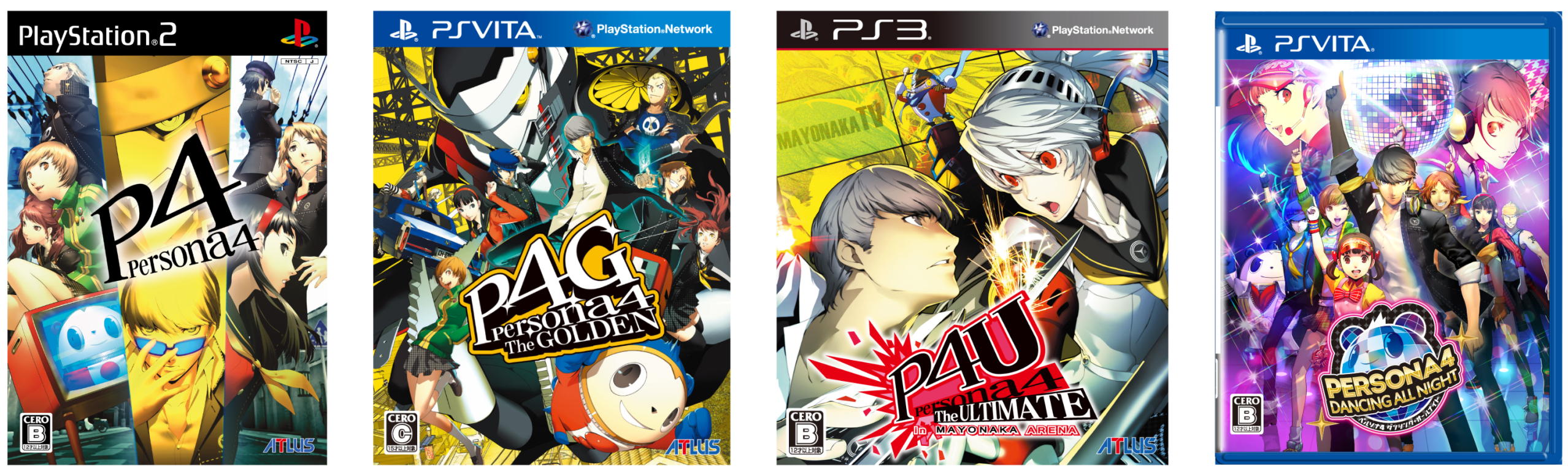
From left: Persona 4, Persona 4 Golden, Persona 4 Arena, and Persona 4: Dancing All Night
This expansion was supported by collaboration with partner companies that had proven track records in their respective genres. ATLUS took on genres that would have been difficult to realize on its own, including fighting games. By leveraging each other’s strengths while preserving what makes Persona distinct, these collaborations created new gameplay experiences, and cumulative sales of the Persona 4 series surpassed 5.70 million units.
The series also began expanding into media beyond games, including TV animation and live music concerts. By extending its worldview across a variety of media, a strategy took shape to maintain contact with fans between releases of numbered titles and enhance the value of the IP.
Global Expansion and IP Growth Accelerated by Persona 5
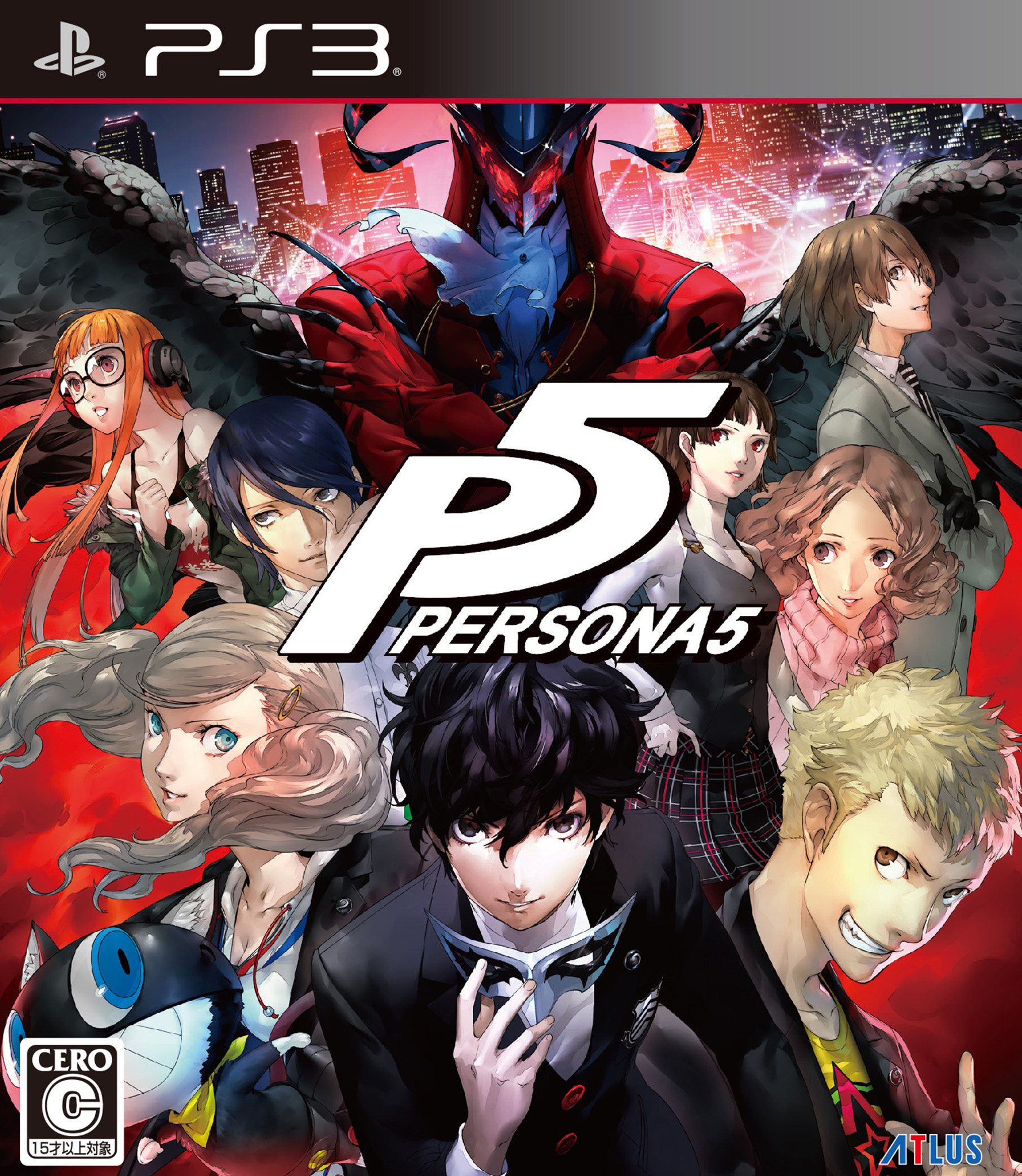
Released in 2016, Persona 5 is centered on the theme of “rehabilitation” and takes the form of a picaresque story, depicting boys and girls who have lost their place in society as they take on an exhilarating fight to reform society. The commitment to craftsmanship was evolved into a scenario with the scale to draw in a mass audience, striking visuals inspired by pop punk, and a sound incorporating acid jazz, helping the title gain fans around the world.
The high acclaim was not merely a passing phenomenon. In addition to winning Japan Game Awards multiple times, the Persona 5 series won Best Role-Playing Game at the global game awards event “The Game Awards” in 2017, earning acclaim both in Japan and overseas and raising awareness of the Persona series not only in Japan, but on a global scale as well.
In addition, with the remastered version of Persona 5 Royal, ATLUS achieved a simultaneous release in 15 languages. Past titles have also been made available on multiple platforms, including PC, creating an environment in which users around the world can experience Persona.
Persona 5
As a result of these initiatives toward global expansion, cumulative sales of the Persona 5 series have surpassed 13 million units. Across the Persona series as a whole, cumulative sales approximately doubled between 2020 and 2024. Looking at the breakdown of sales by region, North America accounts for approximately 40%, Japan for about 20%, and Europe and Asia for around 20% each. Taken together, these figures show that Persona has grown into a global IP, with overseas markets accounting for approximately 80% of its sales.
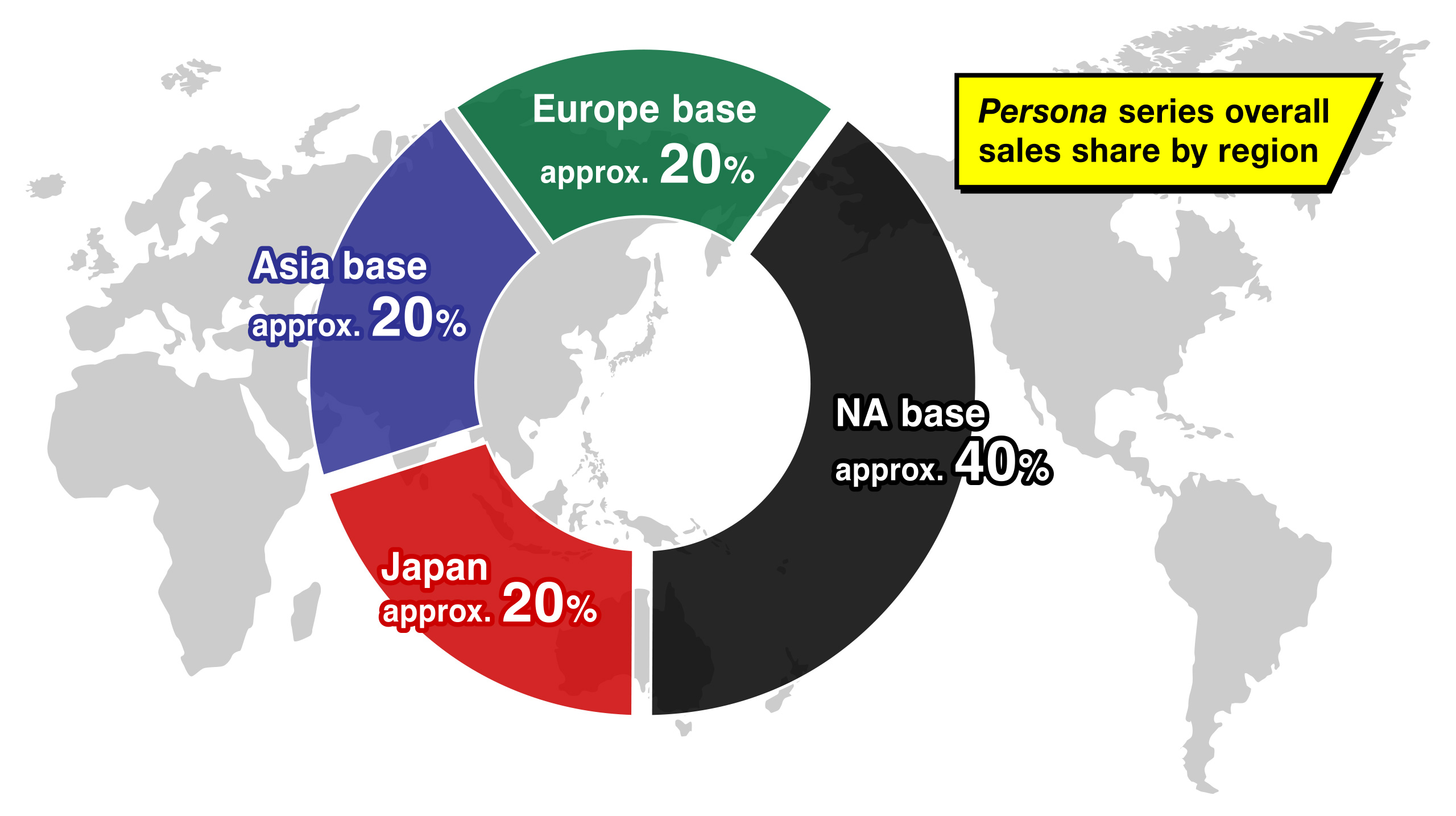
*Sales share by region is calculated based on each sales base.
The North American base is responsible for sales in North, Central, and South America; the European base for sales in Europe; and the Asian base for sales in Asia and the MENA region, comprising the Middle East and North Africa.
In 2024, the series’ first free-to-play title, Persona5: The Phantom X, was launched in China and Asia, followed by Japan and North America from 2025. Offered on iOS, Android, and PC as a free-to-play title, it aims to attract new user segments.
An IP Strategy Expanding from Games and Sustainable Growth
In recent years, Persona has further advanced its expansion into media beyond games, which began in earnest after Persona 4.
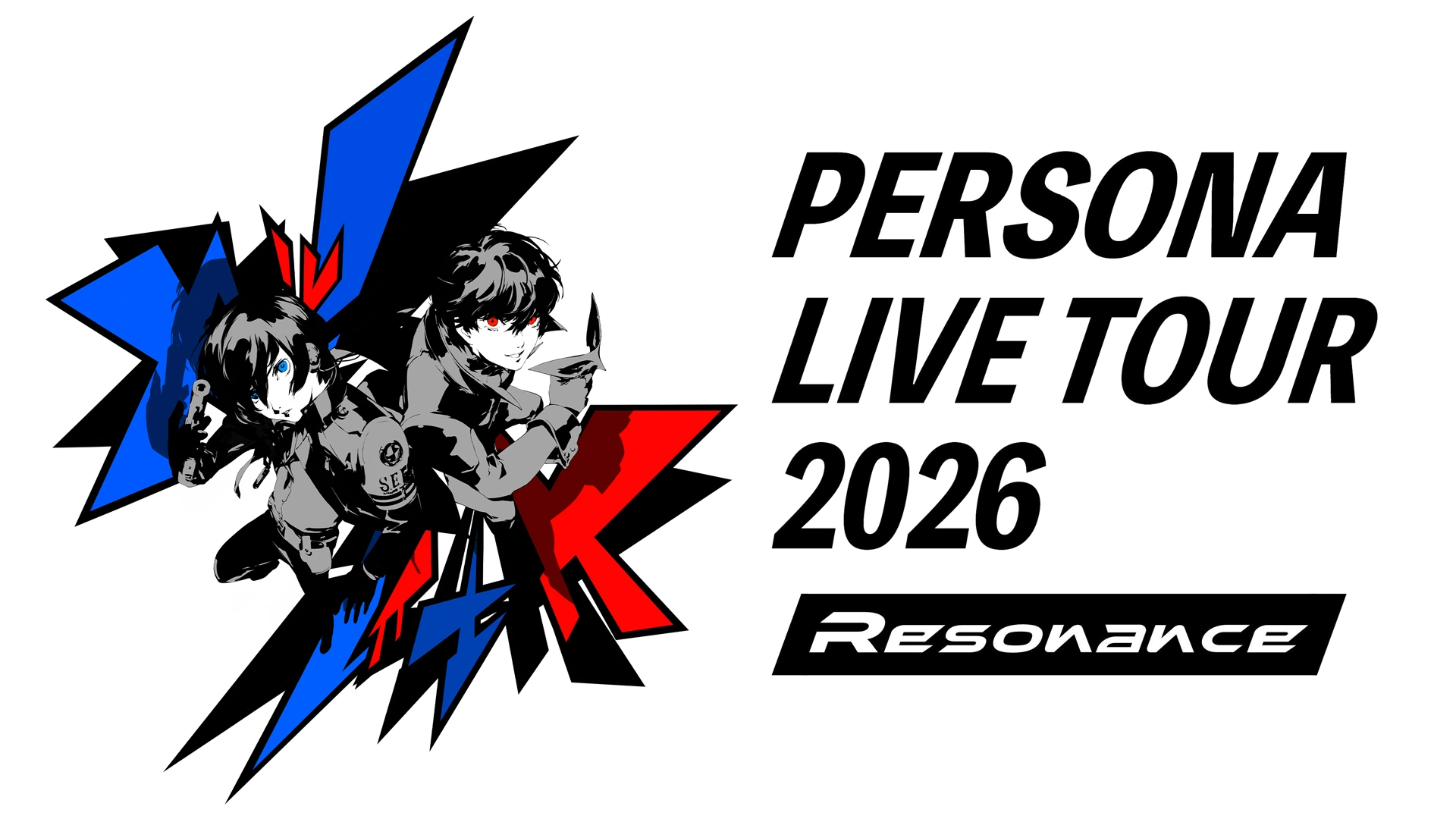
Beginning with “PERSONA MUSIC LIVE -Velvetroom in AKASAKA BLITZ-” in 2008, the live music concerts have expanded both in Japan and overseas. In 2024, the first Taiwan performance was held. In 2026, the year of the series’ 30th anniversary, “PERSONA LIVE TOUR 2026 – Resonance -” is scheduled to take place from September to October. In addition to three cities in Japan, performances are scheduled in Seoul and Taipei.
Alongside merchandising involving confectionery and daily necessities, collaborations with other industries have also expanded, including tie-ins with railway trains and limited-time menu offerings at restaurant chains.
As opportunities to experience Persona beyond the boundaries of games have expanded, the IP has evolved into one supported by a broad range of generations, from teenagers to people in their 40s, with particular focus on those in their 20s and 30s.
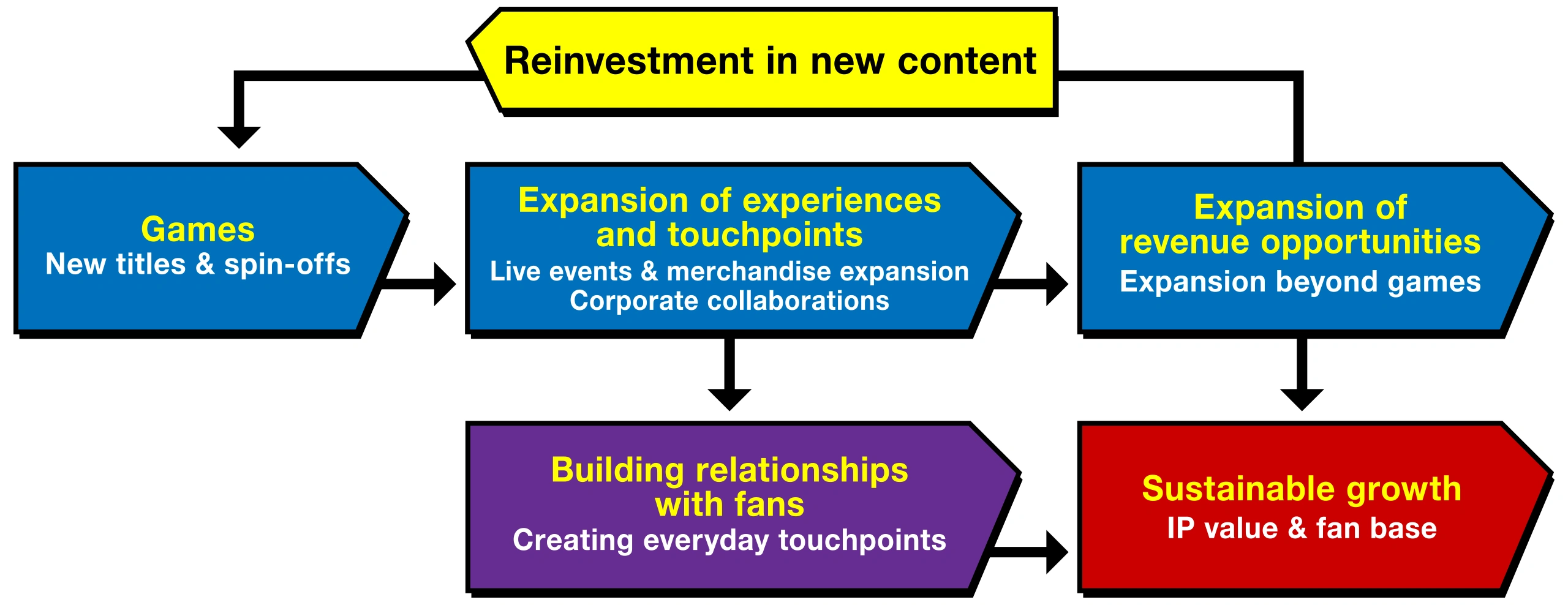
By expanding from games into live events, merchandise, and corporate collaborations, Persona has created revenue opportunities that do not depend solely on game sales, while also building lasting relationships with fans. The virtuous cycle of reinvesting the revenue generated into new games and content supports the sustainable growth of the Persona brand.
Why Persona Is Supported Around the World
Its appeal lies not only in its distinctive worldview. What Persona has consistently depicted throughout the series is the human experience of facing oneself through relationships with others, thinking and choosing for oneself, and growing as a person. The series has kept this universal theme at its core while evolving its expression and IP development in response to the times, maintaining an uncompromising commitment to quality. Unchanging themes and constant evolution. It is the balance between these two qualities that has enabled Persona to grow into a global IP.
With Persona 4 Revival, the full remake of Persona 4 Golden, scheduled for release in February 2027, and the announcement in June 2026 that the latest title in the series, Persona 6, is in development, Persona continues to move forward.
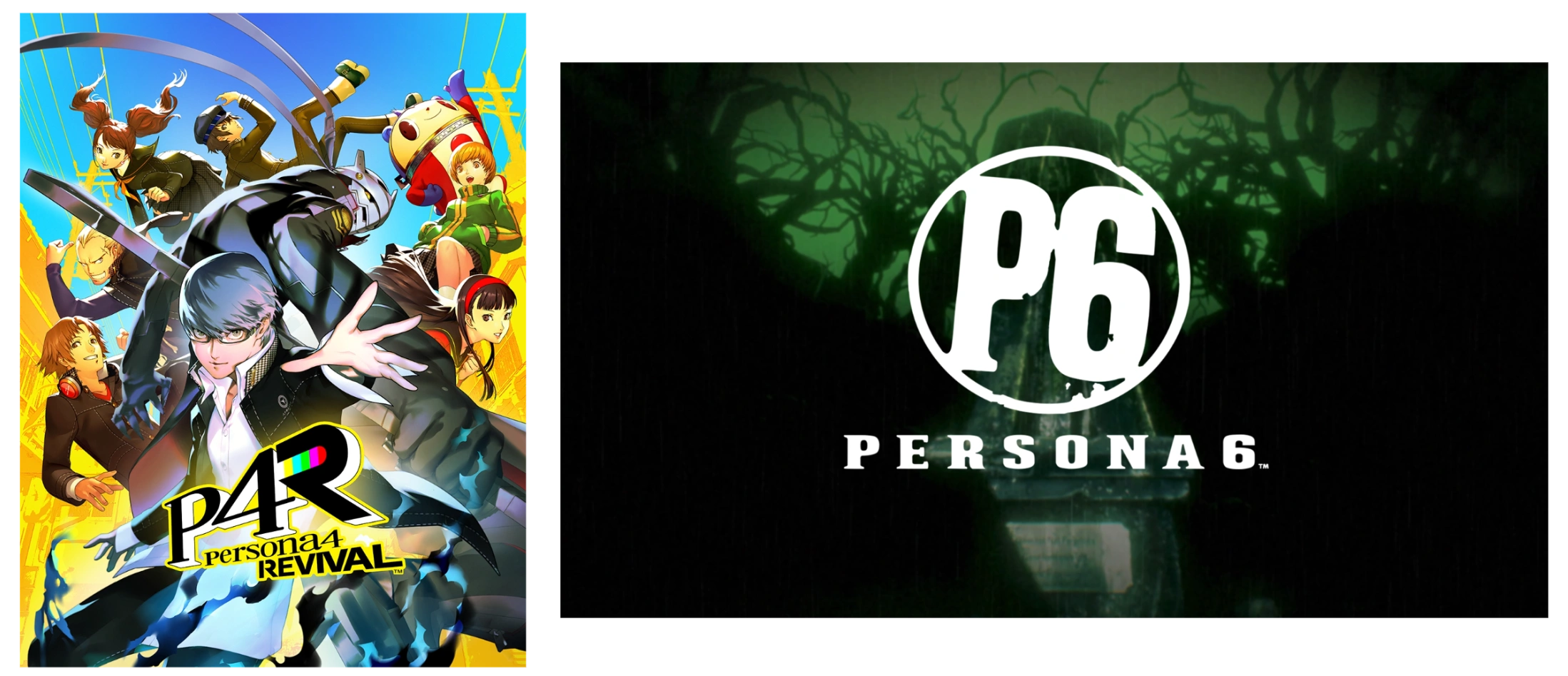
From left: Persona 4 Revival, Persona 6
The development capabilities and brand strength cultivated over the past 30 years are also being carried forward into ATLUS’s new challenges, including Metaphor: ReFantazio, an all-new fantasy RPG released in 2024.
In Part 2, we ask Kazuhisa Wada, General Producer of Persona Studio, what the Persona series aims to achieve as it reaches its 30th anniversary, exploring the behind-the-scenes story and its vision for the future.
©ATLUS. ©SEGA.