Puyo Puyo Today
Puyo Puyo is an action-puzzle game developed by SEGA CORPORATION (SEGA). In the game, players stack falling Puyos and clear them by connecting four or more of the same color. The game has been released on many platforms, including home video game consoles, arcade machines, and mobile apps. With its simple yet deep strategic gameplay and fun character designs, it’s no surprise the game has a loyal fan base, and in 2026, Puyo Puyo will celebrate its 35th anniversary.
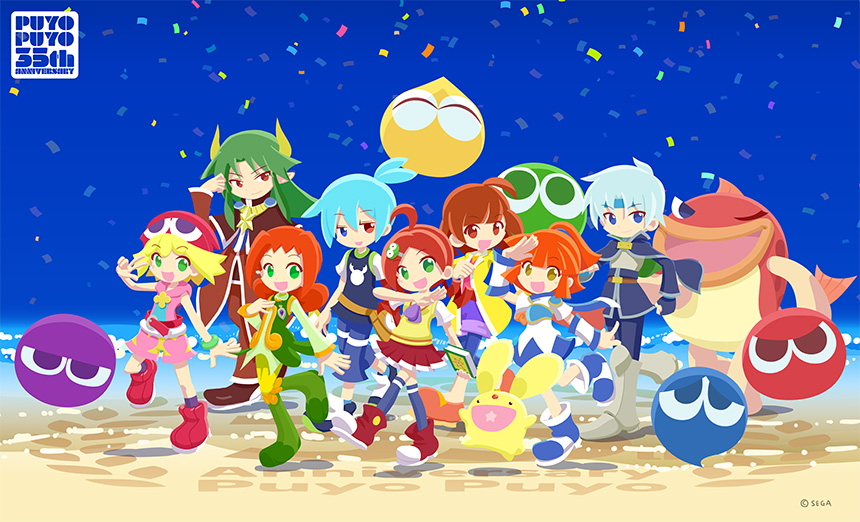
Puyo Puyo 35th Anniversary Key Visual
During its 35-year history, Puyo Puyo has branched out into various areas. Back in 2018, when the Japan esports Union (JeSU, now Japan Esports Union, JESU) kicked off its activities and e-sports was gaining momentum in Japan, Puyo Puyo was one of the first titles to be officially recognized as a competitive game. In addition to SEGA hosting official tournaments such as the Puyo Puyo Championship, Puyo Puyo was also selected for the “The National Prefectural Competitive Esports Championship” in 2019, a special esports event organized by JESU. It’s actually the only game among the competitive titles to feature an “Elementary School Division.”
Recently, esports has become more than just a competitive activity; it’s also attracting attention in events designed for older adults aimed at helping prevent dementia and encourage social connections. These initiatives are spreading throughout Japan, and Puyo Puyo, thanks to its simple, easy-to-understand gameplay, has been used in a variety of events.
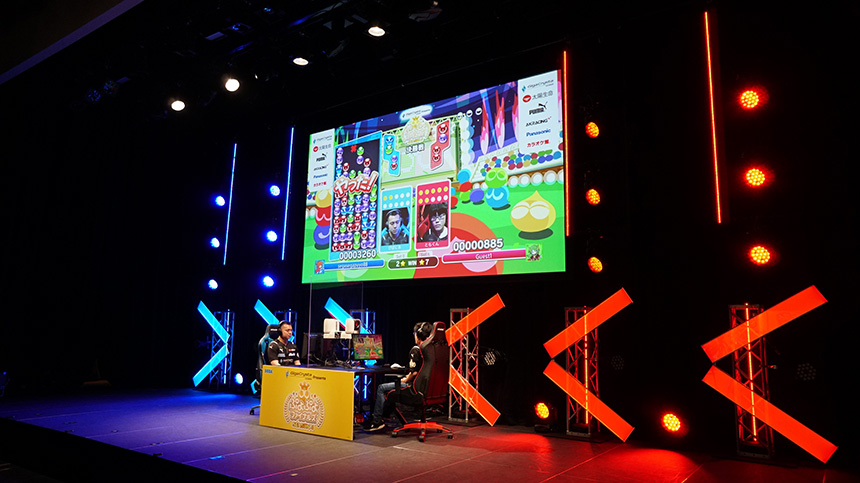
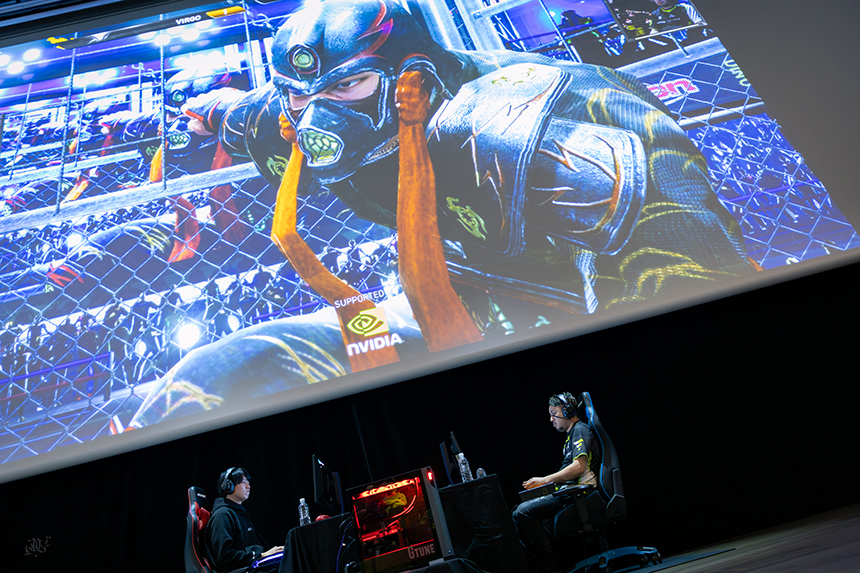
A scene from GigaCrysta Presents Puyo Puyo Finals SEASON 4
Puyo Puyo is enjoyed by people of all ages, from kids to seniors. Lately, it’s even been making its way into school classrooms. Back in June 2020, SEGA started offering Puyo Puyo Programming—a free, fun educational tool based on Puyo Puyo that helps teach the basics of programming.
About Puyo Puyo Programming
In Puyo Puyo Programming, students get the opportunity to learn programming through HTML and JavaScript source code, all while exploring image assets from the retail version of Puyo Puyo. The text and sample code can be accessed online, so anyone with a computer and an internet connection can use this resource. While visual programming tools—where instructions are connected like puzzle pieces to teach logical structures—are often popular educational tools for students, Puyo Puyo Programming uses a “transcription” approach, encouraging users to type the necessary code on a keyboard while referring to sample source code, making the learning experience both hands-on and interactive. This helps students develop more genuine programming skills in a setting that feels like the real world of programming.
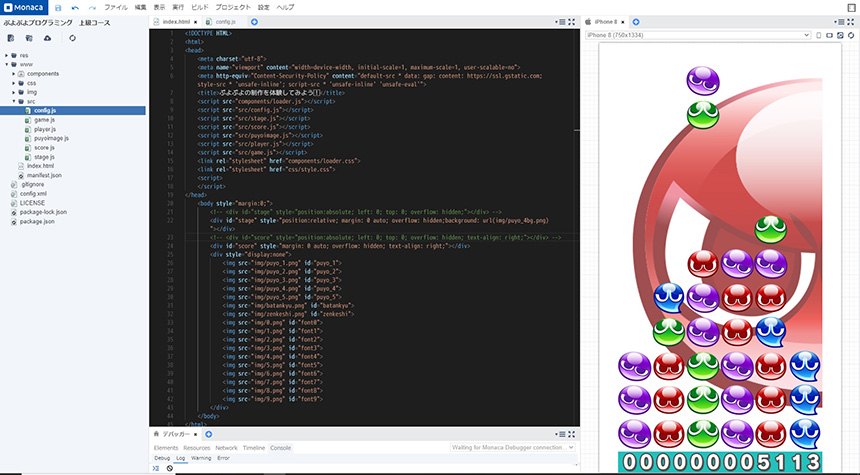
A screenshot from Puyo Puyo Programming. When the user edits the source code in the center of the screen,
the changes show up right away on the game screen on the right.
SEGA’s Global esports Business Department has been using these educational materials to reach out to students by holding classes and workshops at various events organized by school boards, schools, esports organizations, and companies all across Japan. Instead of just teaching programming, the content is specially designed for each group, with fun activities where participants teach each other and share the games they’ve created. Plus, with a professional Puyo Puyo esports player with a background in systems engineering teaching the workshops, they offer more than just programming skills—they also introduce students to what professional esports players acrually do, contributing to career education.
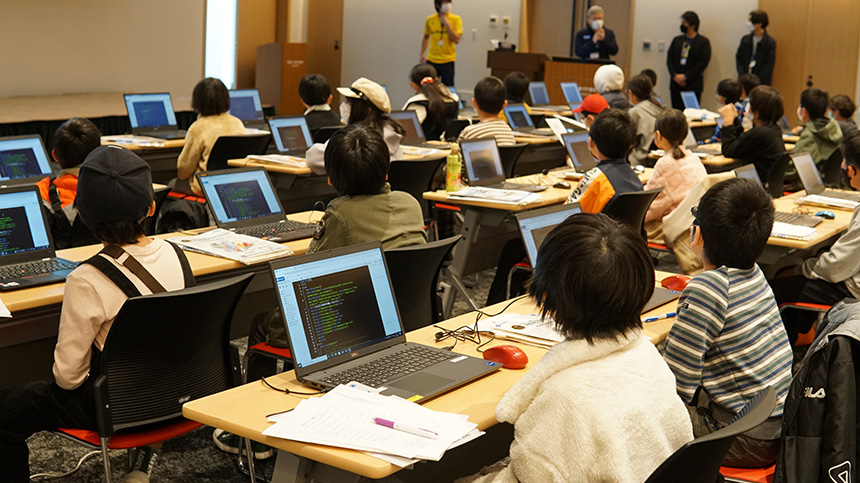
A scene from an outreach class
Also, after learning from planning and organizing activities like SEGA’s outreach classes, and getting feedback from teachers and expert supervision, in 2022, SEGA started giving teachers extra teaching materials for free. With the help of these materials, including a guide for designing lessons using Puyo Puyo Programming and handouts for the classroom, teachers can easily plan lessons even if they don’t know much about programming education. These extra materials are designed to support the Japanese curriculum guidelines for elementary, junior high, and high schools, covering all the basics for classroom teaching.
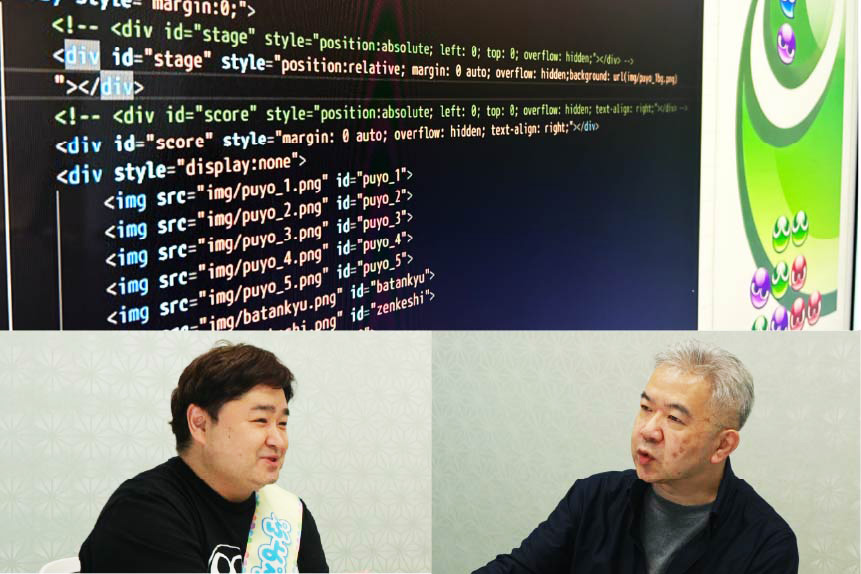
With over 160 schools having hosted Puyo Puyo Programming outreach classes so far, the program’s journey has been filled with learning experiences and overcoming various challenges. So, how did Puyo Puyo Programming find its way into the school education system, and what kind of benefits does it hope to bring to children? We had the chance to chat with Masaru Igarashi, the Director of the Global esports Business Department, Marketing Division, East Publishing Business Unit, at SEGA, who has been passionate about promoting this project from the very beginning, and Mizuki Hosoyamada, Producer of the Puyo Puyo series and a member of the 2nd Development Division, JA Studios 1st Business Unit, at SEGA.
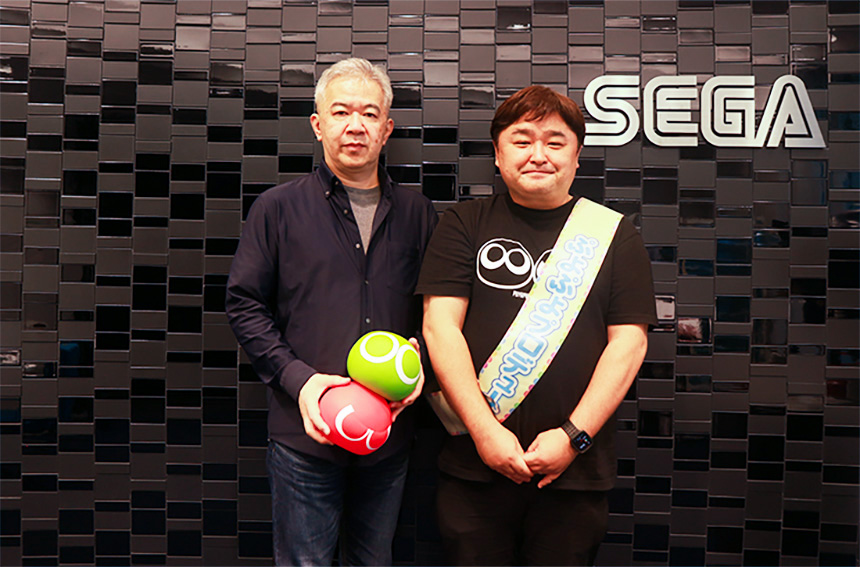
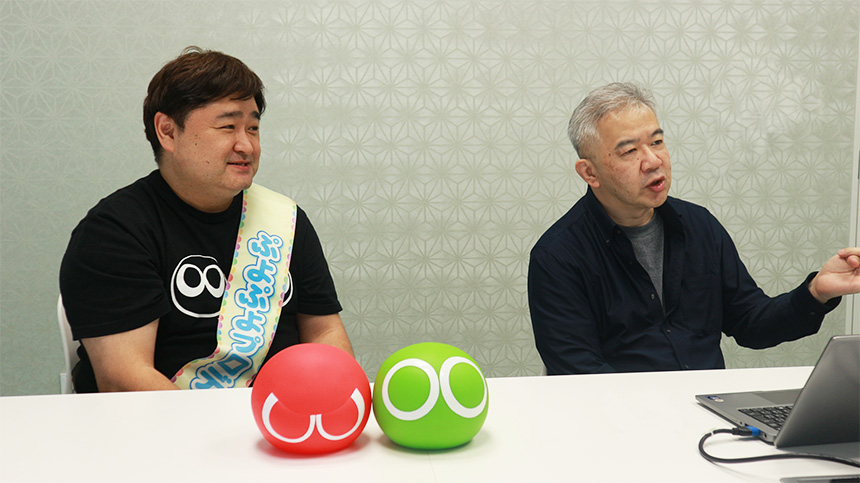
From left: Mr. Igarashi and Mr. Hosoyamada
The Path to Transforming Puyo Puyo into an Educational Tool
In 2018, SEGA made a big move into the esports world, bringing excitement with its many titles. Among them, Puyo Puyo—a beloved game enjoyed by people of all ages and well-known for its popularity—has truly become a shining symbol of SEGA’s growing esports scene. However, Mr. Igarashi shared that there are some challenges they’re facing when it comes to managing tournaments.
IGARASHI
In the past, the Puyo Puyo’s esports scene had been led by players around 25 or 26 years old, but we really wanted to open the door wider for younger players—like elementary and junior high school students—to join in. Our goal was to attract players from a wider range of age groups for the future. At the “National Prefectural eSports Championship,” an event organized by JeSU, SEGA’s Puyo Puyo was proud to be the only game to feature an elementary school division—our aim was to encourage more younger players to get involved. But we realized we could do so much more. That’s why we started thinking about how we could connect with kids at their schools.
But in schools, there were some reservations at first when it came to bringing a game into the classroom.
IGARASHI
It wasn’t easy to get students exposed to esports in schools, so I was trying to figure out various ways to make it more acceptable. That’s when I learned that, with the new curriculum guidelines coming into effect in 2020, programming would gradually become a required subject in elementary, junior high, and high schools. This made me wonder if we could ride this trend to bring Puyo Puyo into schools, which led me to develop Puyo Puyo-based programming educational materials. Then, in 2020—the year programming became required in elementary schools—we released the Puyo Puyo Programming educational materials.
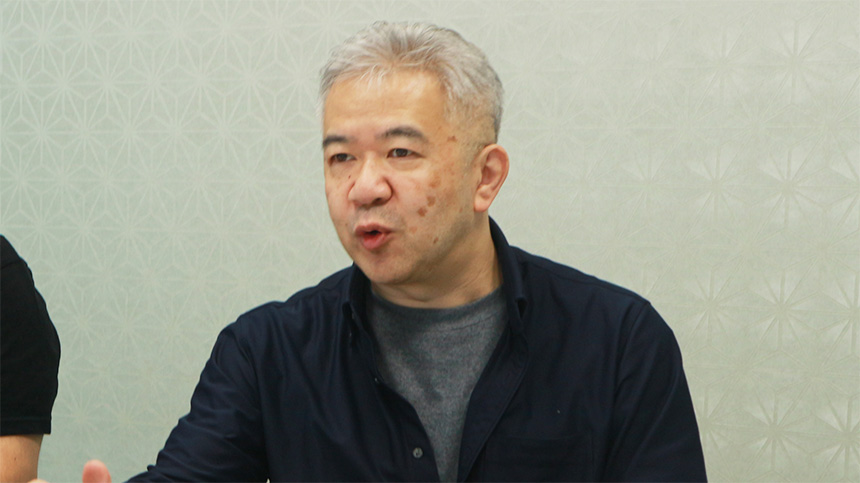
IGARASHI
I was thinking about using this teaching material to actually visit schools and teach on-site classes. But I didn’t have any experience working with schools at the time, so I was pretty much trying to figure it out as I went. Since SEGA SAMMY’s headquarters are in Shinagawa Ward, my first opportunity came when I was asked to give a presentation at the “Principals’ Association,” a group of principals from schools within the ward. I only had three minutes to speak, but after giving a presentation on a lesson using Puyo Puyo Programming, later, I got messages from two schools saying, “We’d be happy to give it a try!”
After the rollout at the first two schools, the Puyo Puyo Programming outreach classes began building a positive track record, one after another. With each successful session, word spread through the community of school principals, and requests started coming in from other schools.
The “invisible wall” that once stood between school education and video games. Mr. Hosoyamada shares his analysis of why Puyo Puyo Programming was able to break through that barrier.
HOSOYAMADA
When thinking about it as an educational tool, the most important thing is that it has to be a game that teachers and parents can easily understand. From that point of view, I think Puyo Puyo was easy to grasp, thanks to its simple rule of connecting four Puyos of the same color to clear them. Since there’s also a scoring element where points are added based on gameplay, it’s not entirely unrelated to mathematical thinking. Plus, because it’s a game suitable for all ages with no violent content, there’s no need to worry about elementary school students playing it. And above all, Puyo Puyo was well-known across a wide range of generations—including teachers, students, and their parents. Looking back now, I think it had all the right conditions to be well-received in school settings.
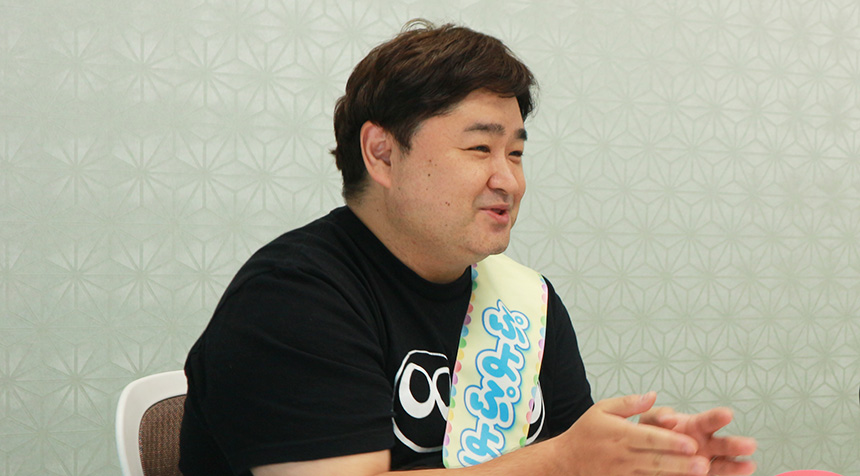
HOSOYAMADA
What’s more, Puyo Puyo turned out to be a fantastic fit for combining gaming with programming education. Its nature as a falling-block puzzle naturally aligned with programming concepts, but what really made a difference was the developers’ decision to make the source code—fundamental to the game—publicly available. This special combination of factors helped transform Puyo Puyo into a valuable teaching tool, allowing it to find a welcoming place in schools.
A Creative Approach to Developing Educational Materials That Bring Out the “Fun” in Learning
Puyo Puyo Programming was developed with a lot of thought, blending creative ideas based on a deep understanding of real classroom environments.
IGARASHI
To make the most of class time, we focused on ease of use and designed the program so that it doesn’t require software installation—you can get started right away with just two clicks in your browser. Usually, programming means writing dozens of lines of code before anything works, but that tends to bore students. So, we designed the program so that simply tweaking a small part of the pre-filled sample code changes the color or speed, making sure students can see the results right away.
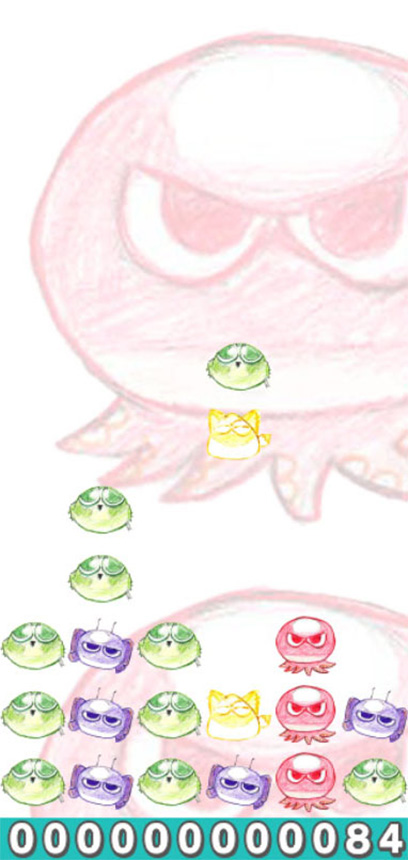
A student’s original Puyo Puyo-style game. By changing the code, you can replace the Puyos with pictures or photos.
The results can clearly be seen in the students’ reactions.
IGARASHI
The students really enjoy it. When they rewrite the code themselves and see the colors of the Puyo pieces or the background change, or the speed at which the Puyo fall change, they let out excited shouts of joy. Even a single typo in the source code can cause an error, but the process of figuring out the cause of the error on their own and correcting it is crucial for developing their logical thinking skills. We’ve designed the program so that these visible changes keep the students interested and make it easier for them to repeat this process of trial and error.
Learning That Goes Beyond Programming Education
Puyo Puyo Programming offers an experience where users not only play the game but also create it themselves. This unique approach opens up a wide range of learning opportunities that extend far beyond programming education.
IGARASHI
At a high school in Hitachi-Omiya City in Ibaraki Prefecture, students who had taken a Puyo Puyo Programming class teamed up with their teachers to hold an event at a local shopping mall where they taught programming to elementary school students. This experience of sharing what they’ve learned with others not only helps develop programming skills but also boosts their initiative and communication skills. It also serves as an opportunity to build relationships across grade levels, bringing together elementary and high school students.
From the standpoint of social interaction, events held using Puyo Puyo Programming also serve as opportunities for exchanges across generations.
IGARASHI
In Narahamachi, Fukushima Prefecture, workshops are being held where elementary and junior high school students and senior citizens can experience Puyo Puyo Programming together. The series runs for four sessions; while the first three sessions have drawn around 40 participants, the fourth and final session is expected to be much larger, with close to 200 participants, including school staff, parents, and local government officials. Recently, limited digital learning opportunities for older adults have become a social issue. This event provides a new platform for interaction and a wonderful chance for elementary and junior high school students and senior citizens to learn from each other as equals.
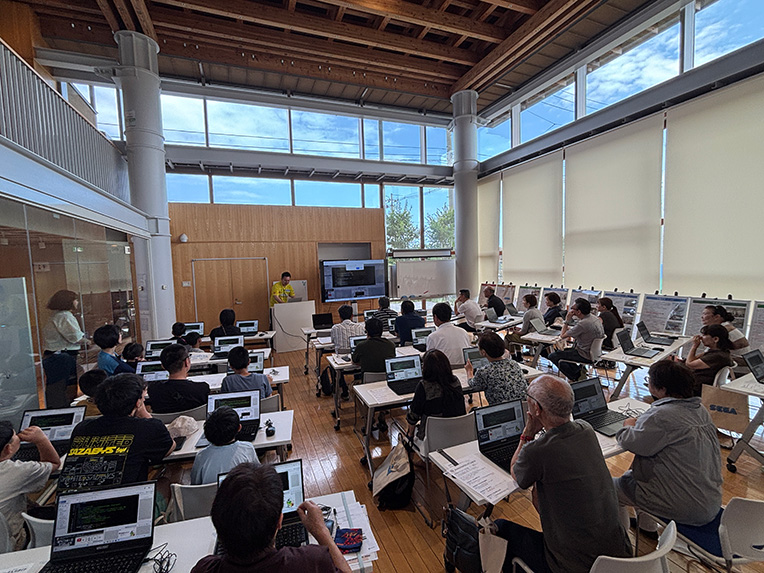
A scene from the Narahamachi Workshop
As a result of these efforts, programming education creates a connection point that encourages communication across generations. However, Puyo Puyo Programming offers students much more than just programming education. Mr. Hosoyamada explains it like this.
HOSOYAMADA
Students are learning programming, of course, but we’re also introducing them to the world of game development. They get hands-on experience with source code written in English, use mathematical thinking when building puzzle games, and put their drawing skills and artistic talent to use when creating game illustrations. Since the skills they learn in school can be used directly in game development, we help them connect their current learning to how they can apply it in the future. We also share the message that “there are jobs like game creators out there.” In other words, it’s sort of like a type of career education. When we get requests for classes from teachers, they often tell us they hope we’ll do more than just offer programming education—they also want us to include some aspects of career education.
A key highlight of the Puyo Puyo Programming outreach classes is that the instructors are professional esports players. Hearing directly from professionals and interacting with them offers students a fantastic opportunity to gain a deeper understanding of careers in the gaming industry.
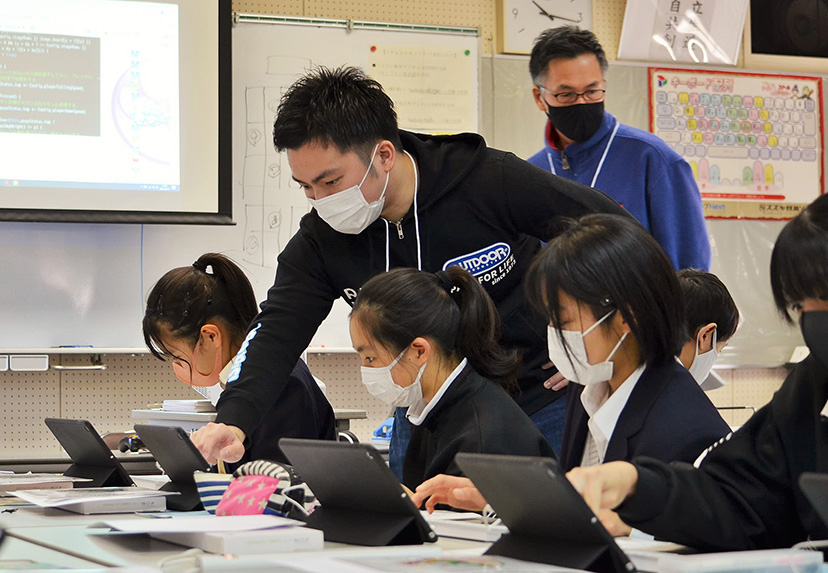
An outreach class with professional esports player Piponeer as the guest instructor
HOSOYAMADA
These activities may not produce direct profits for the company. But if they become the stepping stone for students to develop an interest in careers in the gaming industry—and if they could lead to the birth of future game creators—then I believe this is an important investment in the future for an entertainment company.
Mr. Igarashi also says he hopes that the professional esports players serving as instructors will see the benefits for themselves.
IGARASHI
Even though they are professionals, esports players are still not very well-known. I think many people aren’t even aware of what they do. My hope is that this workshop will not only help school officials and local government representatives get to know the players, but also give players an opportunity to think about second careers that build on their experience.
The Future of Puyo Puyo Programming
Finally, the two of them shared their vision for the future of Puyo Puyo Programming.
HOSOYAMADA
Just now, I talked about how this project is an investment in the future of the entertainment industry. But personally, I’d love to see some students who try out Puyo Puyo Programming discover a real passion for game development, maybe even deciding to join SEGA someday. I’d be really happy if Puyo Puyo Programming sparks interest in more students to explore careers in gaming and related fields. Even if just one person gets the chance to experience jobs in the gaming world—not only game development—and begins to dream of becoming a professional esports player or working in entertainment, I’d consider that a wonderful success.
IGARASHI
It’s been six years since we started the Puyo Puyo Programming project. What began as workshops mostly offered free of charge has now grown to the point where, thanks to the positive reputation we’ve earned, we’ve been able to charge a fee for all of them in the last few years. We’ve now entered a time where games can play an active role in the classroom, and the possibilities for Puyo Puyo Programming only continue to grow. Even in today’s world, where AI can write source code, programming knowledge is still essential for correctly interpreting and using that code. When it comes to helping students master these basic skills, there’s still so much we can teach them through Puyo Puyo Programming. In fact, we’ve held workshops at about 160 schools so far, and after each session, students would come up to me and say, “This is so much fun—can we keep going a little longer?” or “How can I change this part?”—showing genuine interest and a desire to learn more. To support their passion, I plan to keep updating the program—for example, by breaking down source code into smaller, more understandable parts and preparing teaching materials that explore topics more deeply. Over the last few years, with support from our partner companies, we’ve also held workshops in places like Singapore and the UK. Looking ahead, I’d like to expand our activities overseas even further with this “esports × programming” package.
Puyo Puyo Programming started with the goal of promoting esports. But as the creators and developers looked for ways to connect with schools, they began thinking about which educational strategies would best benefit students and how Puyo Puyo, as a game, could open up unique learning opportunities. Over time, this project has grown from just teaching programming to also supporting career education. Looking ahead, Puyo Puyo Programming will continue to adapt and grow, opening up exciting new ways for students to learn and explore.
[Official Website] (In Japanese only)
Puyo Puyo Programming::https://puyo.sega.jp/program_2020/
Puyo Puyo Portal Site:https://puyo.sega.jp/portal/index.html
©SEGA