Sonic the Hedgehog—The Supersonic Blue Hedgehog
With his blue body, spiky hair, lanky arms and legs and big red shoes, Sonic is instantly recognizable as SEGA CORPORATION’s mascot character. An easy-going wisecracker most of the time, he will help anyone in trouble. This appealing personality has helped him win fans in Japan and around the world over the past three and a half decades.
Sonic’s video game series boasts more than 1.77 billion unit sales and downloads (full games and F2P total) worldwide, and in recent years the IP (intellectual property) has been expanding its reach beyond video games into other media. The first Hollywood movie for the Sonic IP, which was released in 2020, recorded the highest U.S. box office earnings for a movie based on video game, though that record was soon broken by its sequel. The latest installment in the series released in 2024, Sonic the Hedgehog 3, took in more than 490 million USD in worldwide earnings and brought the three films’ total global box office takings to 1 billion USD.
Sonic’s global popularity is no longer limited just to games, as his IP has expanded into not only movies, but animation and merchandise as well. This is the year the world-famous supersonic blue hedgehog celebrates the 35th anniversary of his creation.
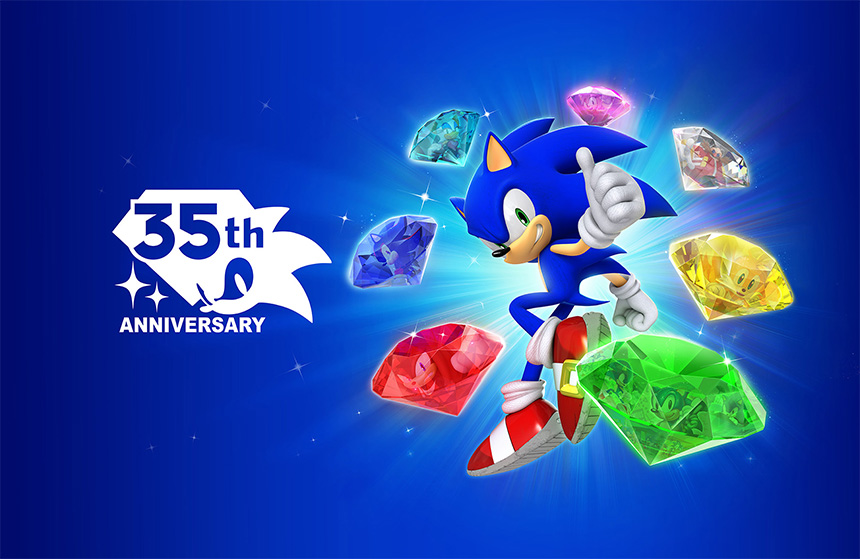
Sonic 35th anniversary key visual
Sonic’s Birth and History
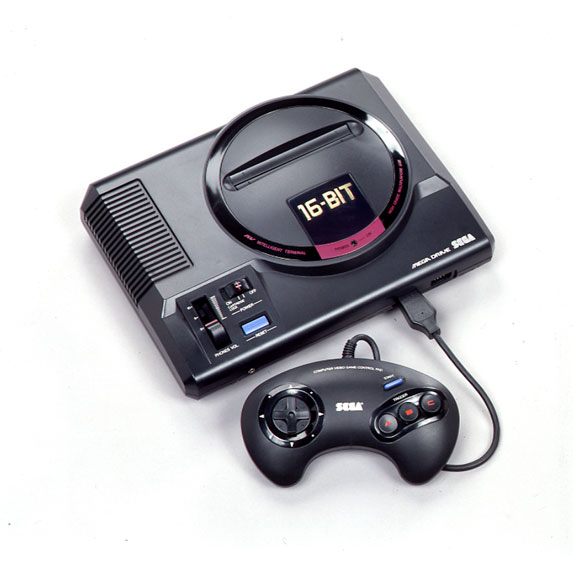
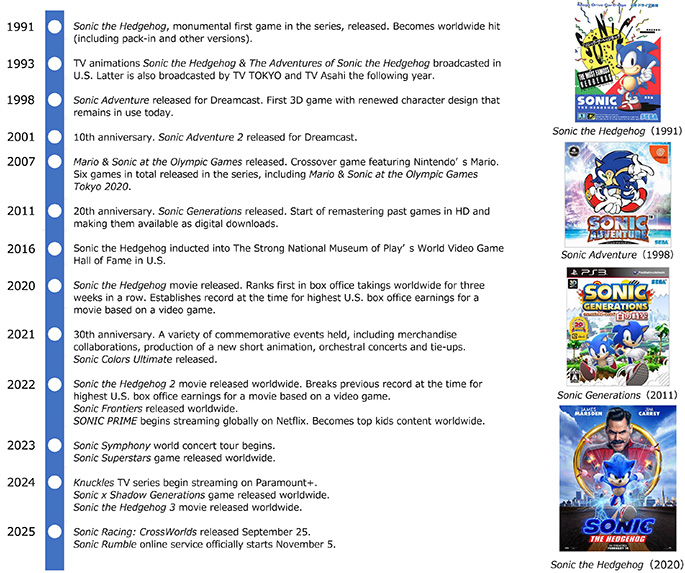
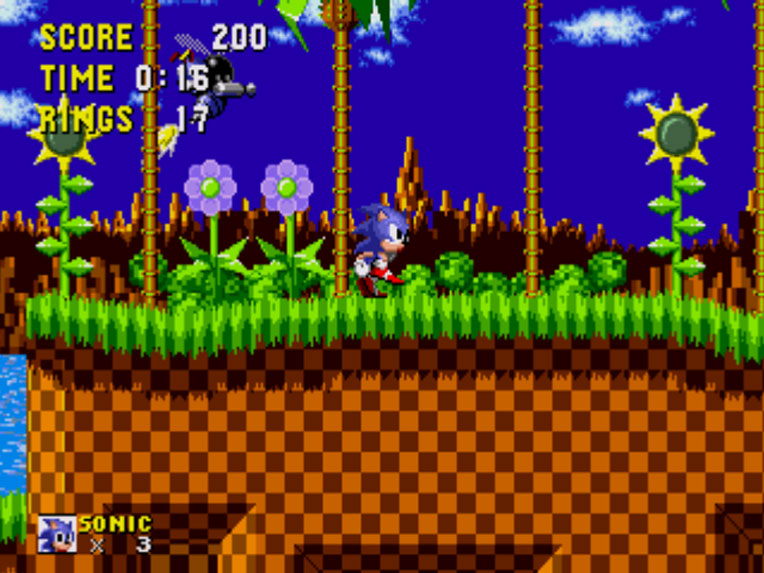
In 1991, Sonic the Hedgehog was released for the Mega Drive (Genesis in North America), SEGA’s consumer video game console at the time. The game made use of the Mega Drive’s ability to render to the screen quickly to create the “high-speed action” that brought exhilaration to the gameplay and helped Sonic become a worldwide hit that instantly made the Blue Blur popular around the globe.
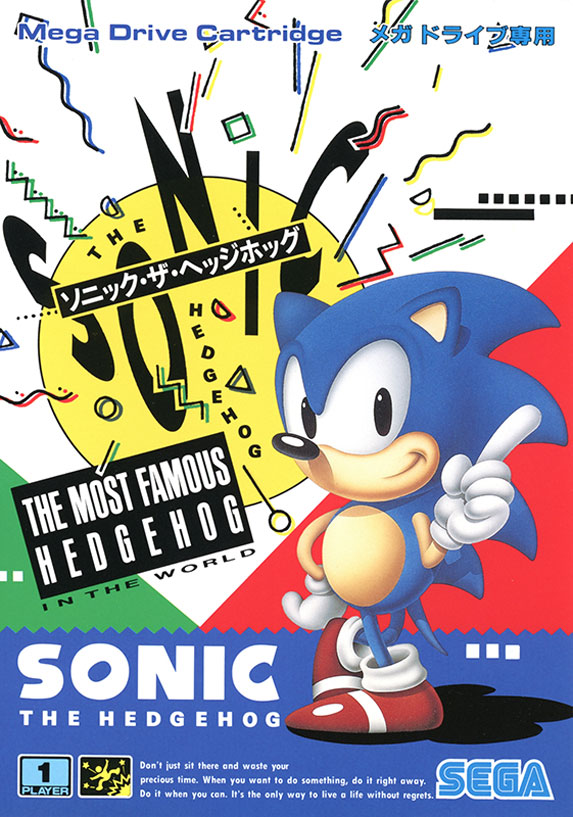
A variety of other characters began to appear in the series starting with the addition of Tails as Sonic’s sidekick in the first title’s sequel, Sonic the Hedgehog 2. Sonic has since appeared in a wide variety of other genres besides the action games where he got his start, including racing, fighting and party games.
Sonic has also etched his name in the annals of video game history. In 2008, he took first place in a survey by UK newspaper The Daily Telegraph regarding the country’s favorite game character survey, and in 2016 he was inducted into the World Video Game Hall of Fame at The Strong National Museum of Play in the U.S. That this fleet-footed hedgehog’s popularity is not just limited to video games has been proven numerous times, with the most recent example being the three hit movies that started with Sonic the Hedgehog in 2020. As the trailblazer for SEGA’s transmedia strategy* outlined in the company’s business plan, Sonic’s reach is expanding beyond the boundary of video games into film, animation and even plushies and other merchandise.
*Transmedia strategy: A strategy promoted by SEGA that seeks to enhance the value of its rich IP portfolio from multiple perspectives by expanding its individual core game IPs into movies, animation, merchandise, and other media.
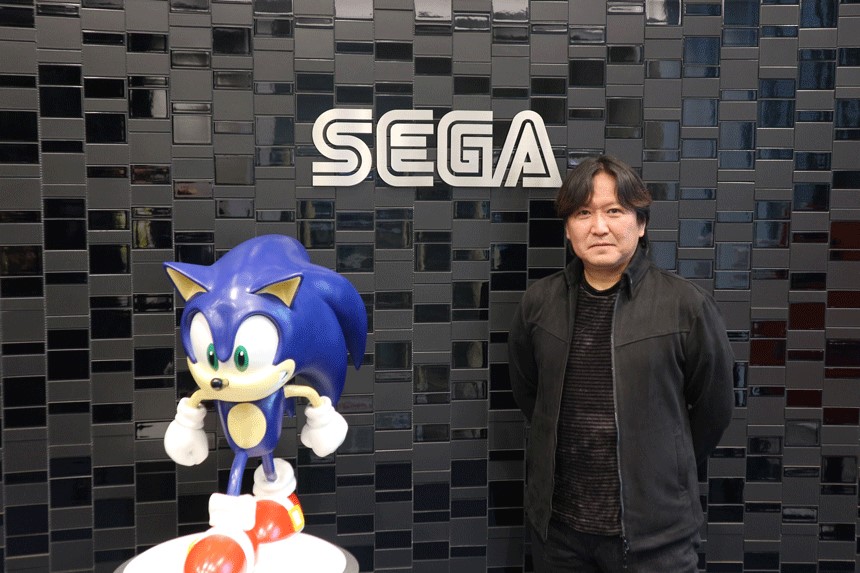
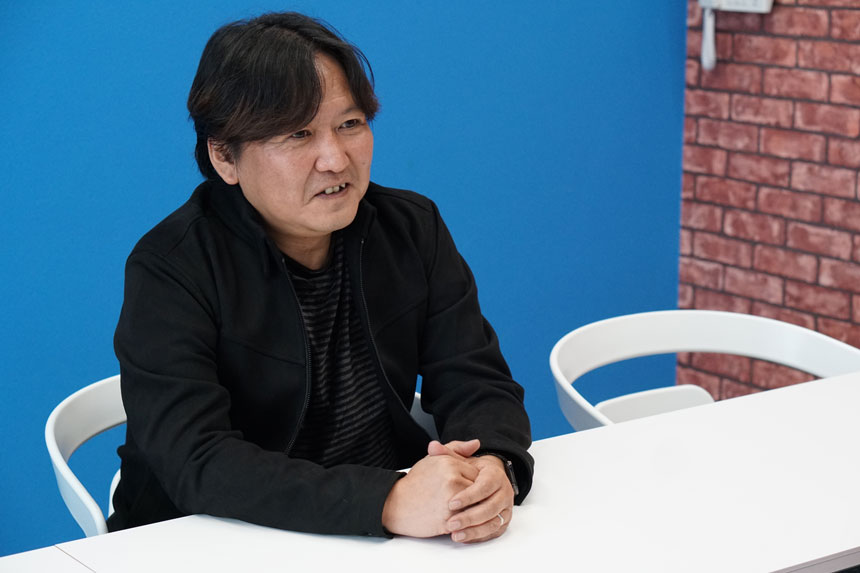
Hidden in the birth of SEGA’s mascot are a variety of concepts that link to the present day. To find out more about how Sonic came into being and the intent behind his creation, we spoke with Takashi Iizuka. Mr. Iizuka is both an executive officer and the Sonic Creative Officer at SEGA, and he has been involved with the Sonic IP for more than 30 years at both SEGA and Sega of America, Inc. (Sega of America), the company’s U.S. subsidiary.
Sonic’s Birth and Strategic Context
―How did Sonic come about?
Iizuka
At the time, SEGA was also selling consumer video game consoles and fighting for a piece of that market. Something it noticed when looking at its competitors was that they had mascot characters. However, SEGA lacked a mascot of its own that could drive console sales. That was the starting point for the genesis of Sonic as a character.
―How was Sonic created as a character?
Iizuka
In making a new mascot character, SEGA’s emphasis was on making it interesting in a way that differentiated it from competitor’s characters. To do this, it focused on the Mega Drive’s unique characteristics. The console’s rendering capabilities were extremely powerful for the time, and it was also able to do high-speed scrolling. SEGA decided to create a game based on the concept of high-speed action that made use of those capabilities.
―Based on this concept of leveraging the performance of the Mega Drive, the character became a supersonic hedgehog. Why a hedgehog?
Iizuka
Though people don’t think of hedgehogs as fast animals, that’s what the development team ended up with when it worked backwards from what’s an essential element of the game’s high-speed action. Everyone on the team at the time had a good feeling about the exhilaration that came from the game’s speed. However, at the same time they felt the character needed an attack to match this. The sense of speed would be ruined if the character stopped every time it ran into or attacked an enemy. This is where they came up with the idea for the character just jumping into enemies to attack them. Then they asked themselves the kind of character that could attack an enemy by jumping into them. That’s where the idea for a hedgehog, which rolls up into a spiky ball, came from.
―So, Sonic’s design came about as a necessity of the nature of the game. While that explains his appearance, how was his personality designed?
Iizuka
Sonic was made with the goal of being a hit in the North America. The image of the American hero was someone who was cool, a bit of a rebel, not a high-achiever, yet would always help the weak. The team also reflected that kind of “cool” image in Sonic. At the same time, Sega of America worked out a marketing strategy to sell the Genesis, which had little name recognition in North America at the time, to teenagers as being cool and trendy precisely because it was a niche thing. This overlap of marketing Sonic and the Genesis as cool and trendy went exactly as planned and both became massive hits. Ultimately, SEGA’s share of the North American game console market also topped that of its competitors. The impact of that may be why Sonic is still popular there even today. Go to any elementary school there and you’ll find someone wearing a Sonic t-shirt: That’s how big of a thing Sonic still is.
Sonic’s Growth and Expansion into Other Media
―Though originally designed to be a hit high-speed action game character, in recent years Sonic can be seen frequently in a variety of media besides video games. How did the Sonic IP end up expanding out of games?
Iizuka
Up until around ten years ago, Sega of America hadn’t been very enthusiastic about the licensing business*. Games were the company’s bread and butter, and the only time they put out merchandise and so on was when someone else came to them with an offer. That was the way things were when I was assigned there in 2016.
*Licensing business: A business for which IP royalties are the source of income.
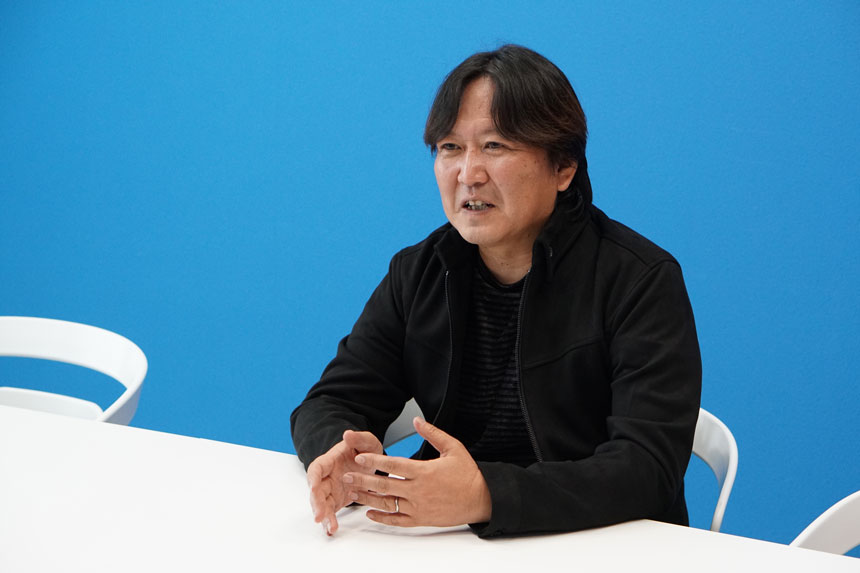
―How did you go about expanding the Sonic licensing business?
Iizuka
In the beginning, we barely had 20 people involved with Sonic in North America, including me. The business was pretty small and was treading water. To get out of this situation, we went from just accepting offers to also being proactive about Sonic merchandising, along with repeatedly pitching Hollywood for a screen adaptation. Our aim was more about increasing Sonic’s name recognition first, rather than directly making a profit. That meant the business teetered on the edge financially for the first year or two.
―That’s a little surprising considering how well Sonic is doing now.
Iizuka
People recognized Sonic as SEGA’s character. However, that was mostly among middle agers, those in their 40s and 50s, who knew Sonic from when his popularity exploded in the 90s. While those who could be called core fans could be found in every age group, in truth, Sonic’s popularity had waned. So, our first job was to reinvigorate core fans by putting out a continuous stream of content they’d enjoy.
―When did that effort finally bear fruit?
Iizuka
The 2020 release of the first Sonic the Hedgehog movie stands out to me. It took about four years after I was assigned to Sega of America in 2016 for things to really take off. While we’ve released three movies so far, Sonic-related licensing revenue has ballooned to several dozen times what it was ten years ago. While most users had been satisfied with playing the Sonic games in the past, they now want to get their hands on merchandise. There’s also a growing number of people that want to try out the games having seen the movies or animation. Because people love Sonic as a character, they want to engage more deeply with the world of Sonic. As more users begin to feel this way, demand for merchandising continues to grow, which in turn enables even broader product development—creating a positive cycle.
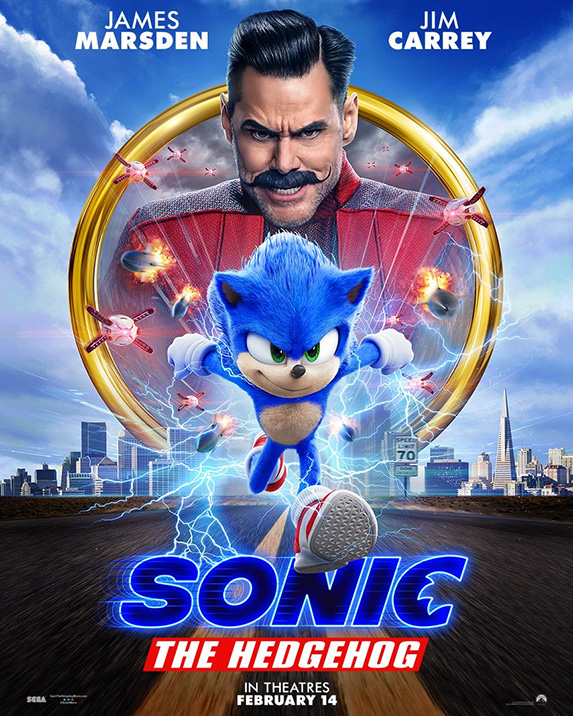
Key visual for the first Sonic the Hedgehog movie.
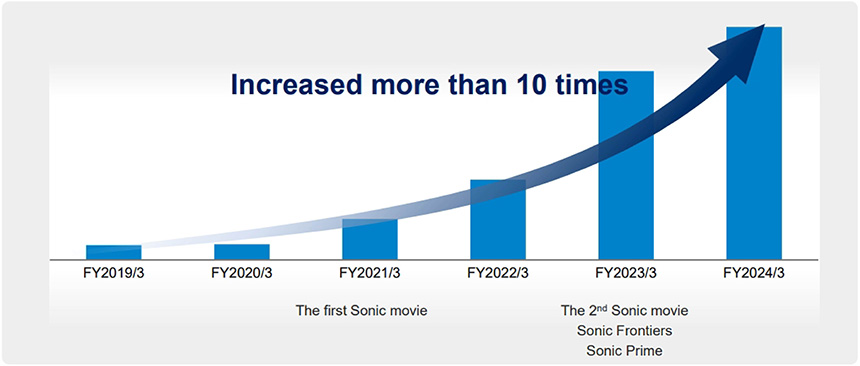
Licensing revenue for the Sonic IP (Source: SEGA SAMMY HOLDINGS FY2024/3 Q2 Results Presentation).
The Origin of SEGA’s Transmedia Strategy and its State Today
―As I feel this will tie into SEGA’s current transmedia strategy, what factors led to the success of Sonic as a character?
Iizuka
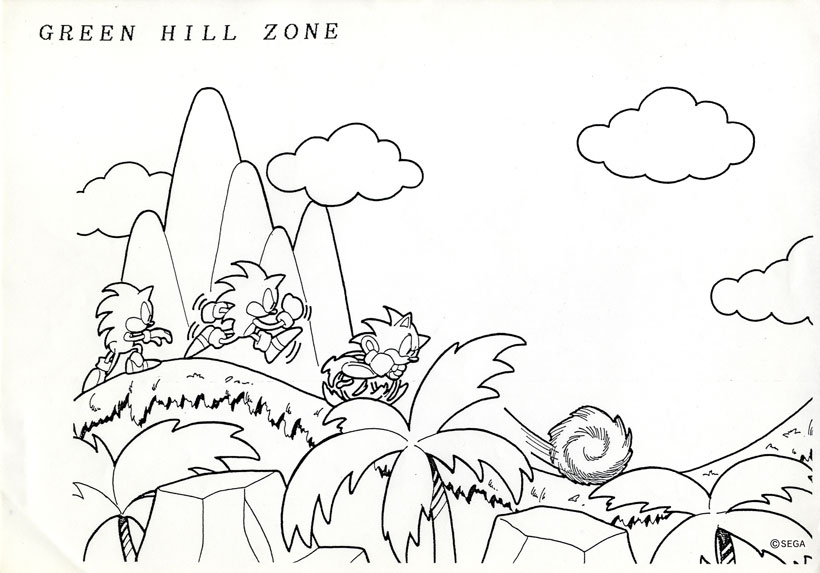
A lot of thought and effort were put into the creation of both the character and game. In the planning stage, the development team prepared a variety of illustrations and sculpted models to express his character in a design that was just two heads tall. Normally you use the game design document during the planning stage to present your idea to the company, but word has it that, at the time, the development team would eagerly talk about how Sonic would go beyond just being a character in a game, even going so far as to make POP displays and concept art of Sonic plushies. I’ve even heard a story that one of the designers personally stood on a roadside in the U.S. with several different design concepts and asked passersby their opinions. Episodes like these show just how strongly the development team wanted Sonic to become SEGA’s representative entertainment character.
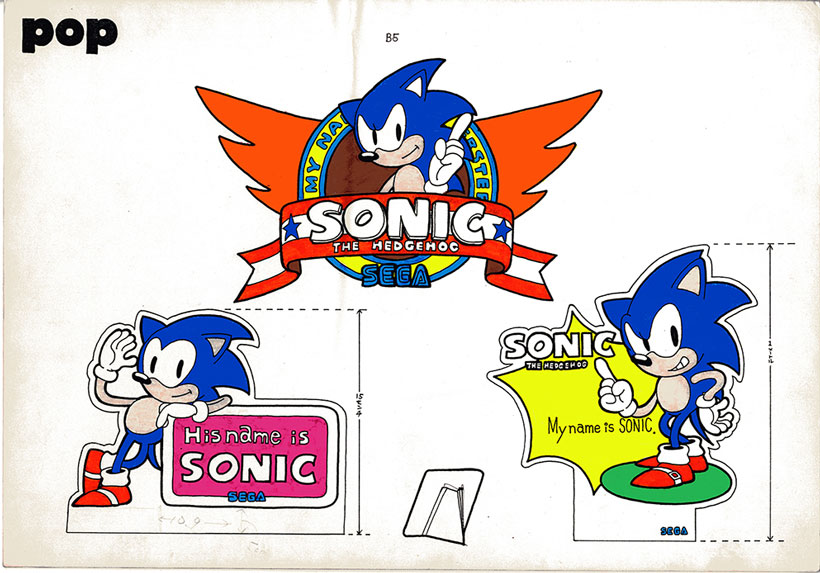
POP display design sheet created during Sonic the Hedgehog’s development. Development team members were already searching for the character’s possibilities even before the game was completed.
―It almost sounds like SEGA’s current transmedia strategy was anticipated all the way back then.
Iizuka
I don’t know whether SEGA had already envisioned such a big strategy at the time. Of course, I’m sure there were people who thought the team was being naïve going so far as to think about merchandising when they hadn’t even made a game yet. However, I think it’s safe to say that the team’s vision back then has become reality, as Sonic is now leading SEGA’s transmedia strategy, which includes the opening of SEGA STORE TOKYO last year, and he continues to gain popularity.
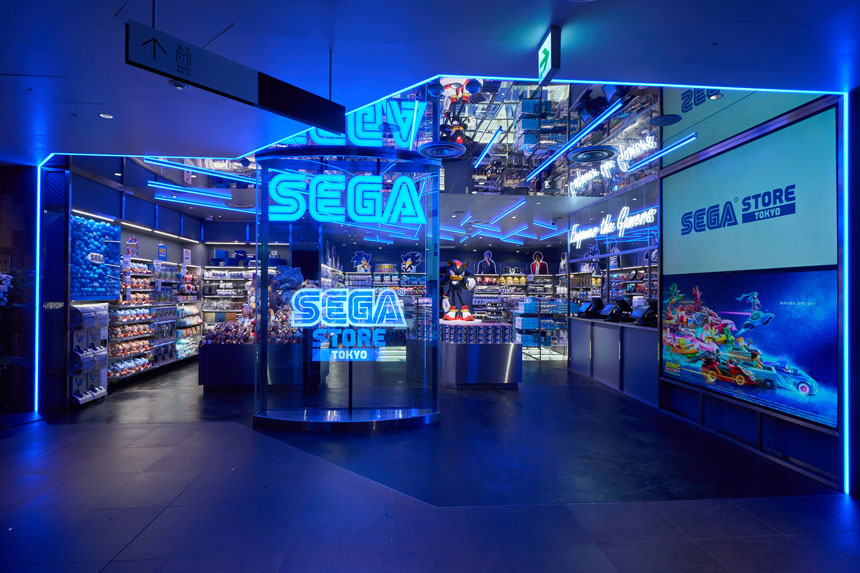
SEGA STORE TOKYO, which opened July 2025 in Shibuya, Tokyo
―The Sonic IP is expanding into a variety of media as part of the current transmedia strategy. What is SEGA’s focus as part of that?
Iizuka
That has to be Sonic’s own unique characteristics of coolness and speed. I believe that’s something that can’t be deviated from. Of course, we are offering a variety of merchandise that may stray from that a little, as some users like cute plushies and others like cool figures. However, that’s just a matter of presentation: Sonic’s core aspects mustn’t change, and they haven’t for the games, which are at the core of the IP and its starting point. Though we offer many different “Sonics” as part of our transmedia strategy, users can still see the original one whenever they play one of the Sonic games.
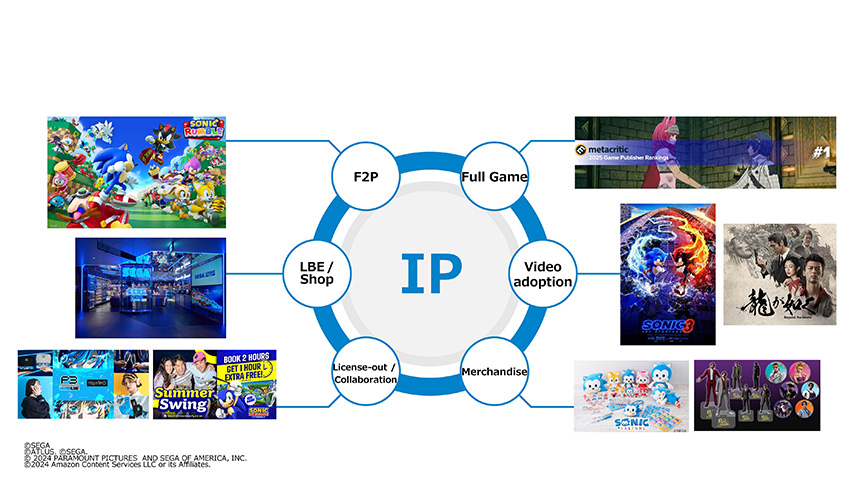
Concept diagram of the transmedia strategy. A variety of “Sonics” are on offer as visual content and products as part of this.
Thoughts on Sonic
―Lastly, could you tell us what you think Sonic’s appeal is?
Iizuka
Sonic is a character that’s always trying new things. As I said before, his core aspects haven’t changed, and that makes it easy for someone who liked him 20 years ago to still accept him whenever they come back to the franchise. As developers we are always trying out rather challenging things with each title, which includes a Sonic that races through an expansive and realistic world in Sonic Frontiers and one that runs around a bright and colorful world in Sonic Superstars. We’ve continued to try out new things and release fresh gaming experiences to users with each title and not just simply pump out one sequel after the other. Our current transmedia strategy, where we are trying our hand at merchandise and making movies is also a part of that. While of course in a sense thrilling, I feel that new captivating experiences are being created with each new Sonic that we do everything we can in that way to deliver.
Sonic celebrates his 35th anniversary this year. Production is going smoothly for the fourth movie, which is planned for release next year. As the representative of SEGA’s transmedia strategy, we will continue with efforts to enable even more users to get to know and become fans of Sonic while taking on more and more new challenges in the games, which are at the IP’s core.
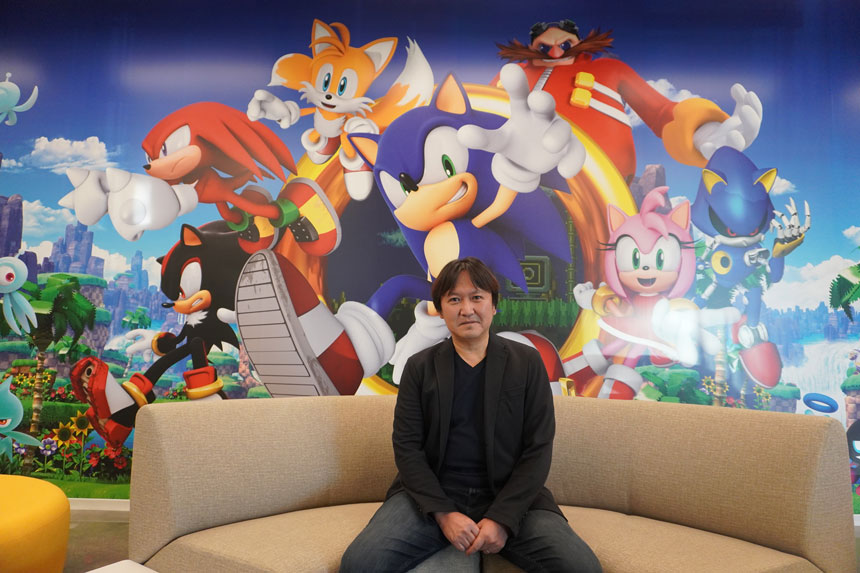
Mr. Iizuka at Sega of America
Since his creation in 1991, Sonic has continued to deliver new captivating experiences to the world for 35 years. His very nature can be said to be the embodiment of the SEGA SAMMY Group’s Mission and Purpose: “Captivate the World -Making Life More Colorful-.” Always taking on new challenges, Sonic will continue to attract attention all over the world.
Official websites:
- Sonic Channel (https://sonic.sega.jp/SonicChannel/index.html)
- Sonic 35th Anniversary website (https://sonic.sega.jp/35th/)